
The post
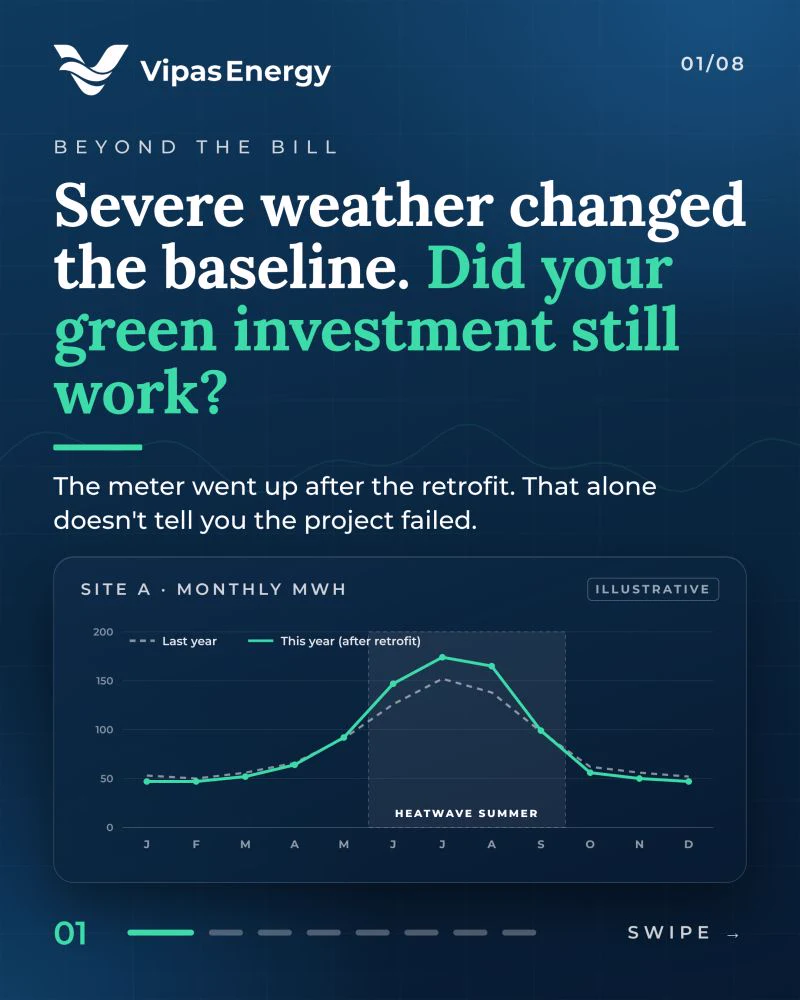
The meter went up after the retrofit. Did the green investment fail?
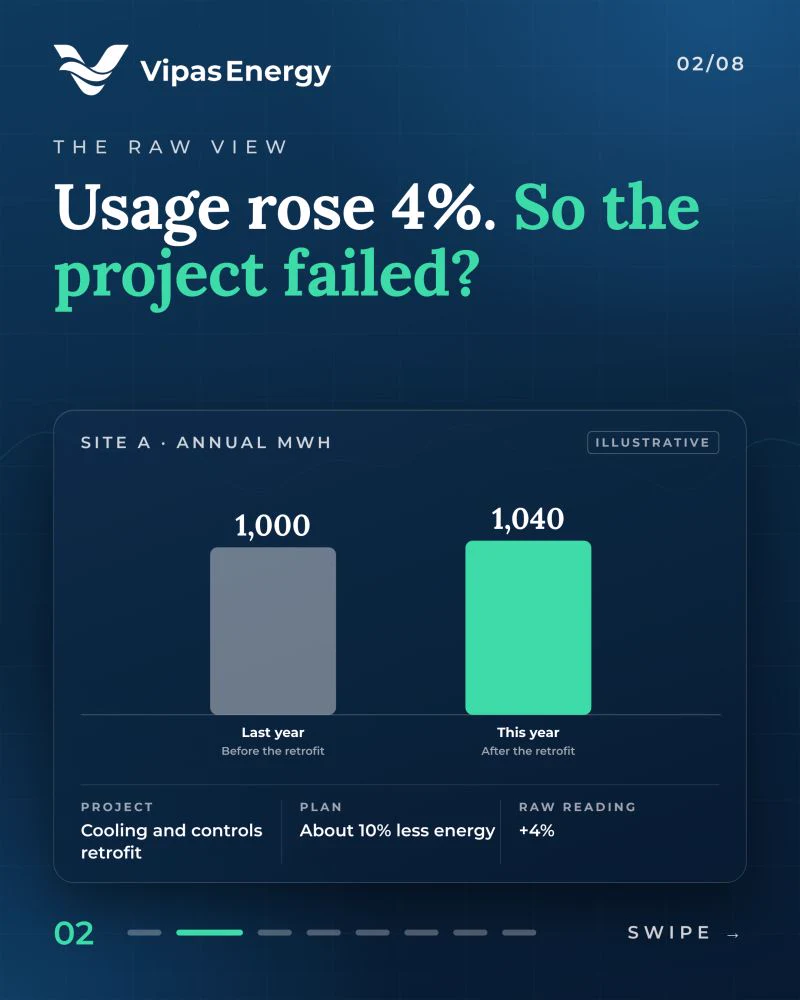
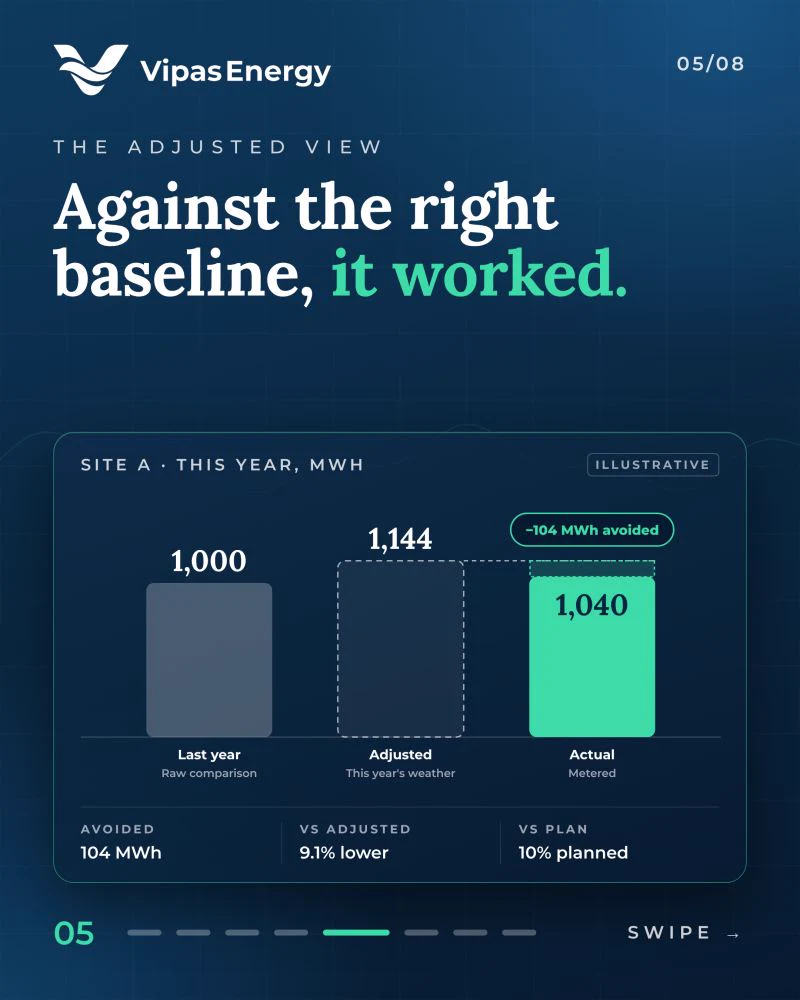
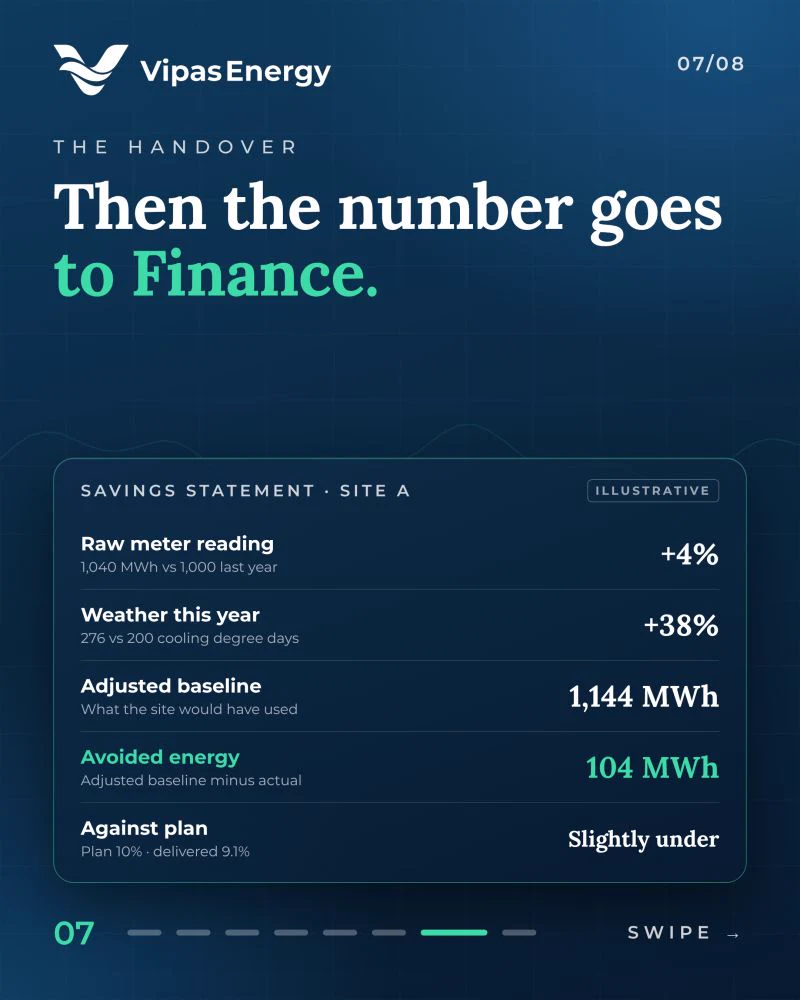
Picture a site that finished a cooling and controls retrofit last spring. The plan said about 10% less energy. This year’s meter reads 1,040 MWh against 1,000 the year before: up 4%.
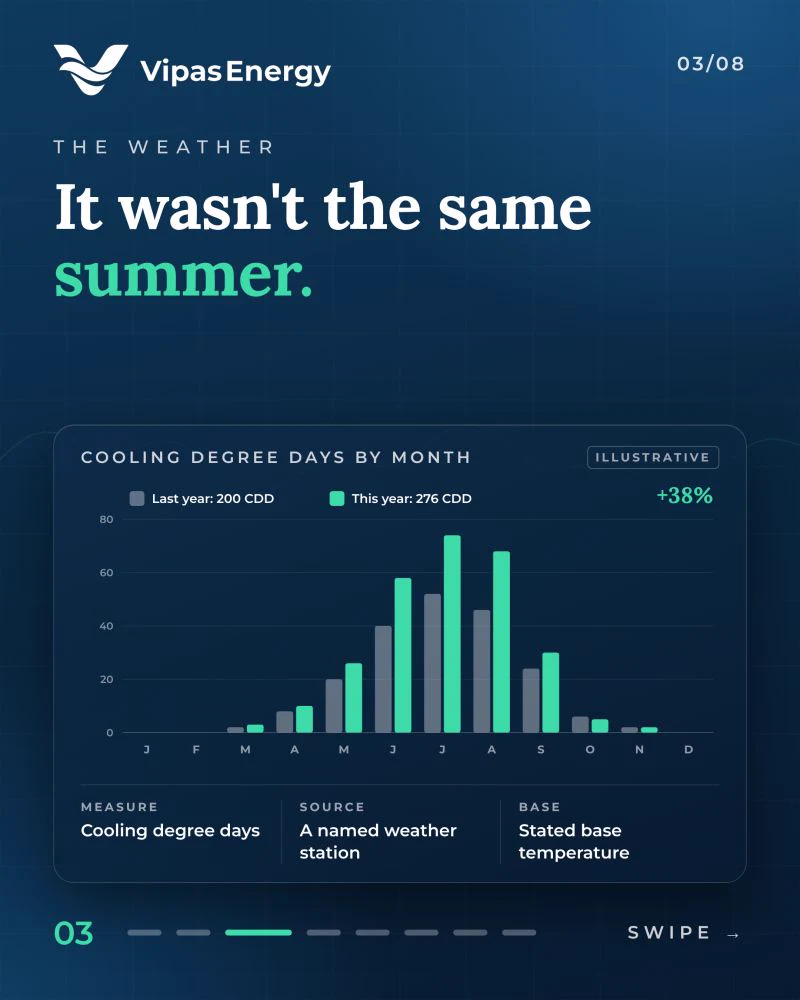
On the raw numbers, the project failed. But this summer was not last summer. Cooling degree days were up 38%.
So the right question is not “did usage go down?” It is “what would the site have used this year, in this weather, without the project?”
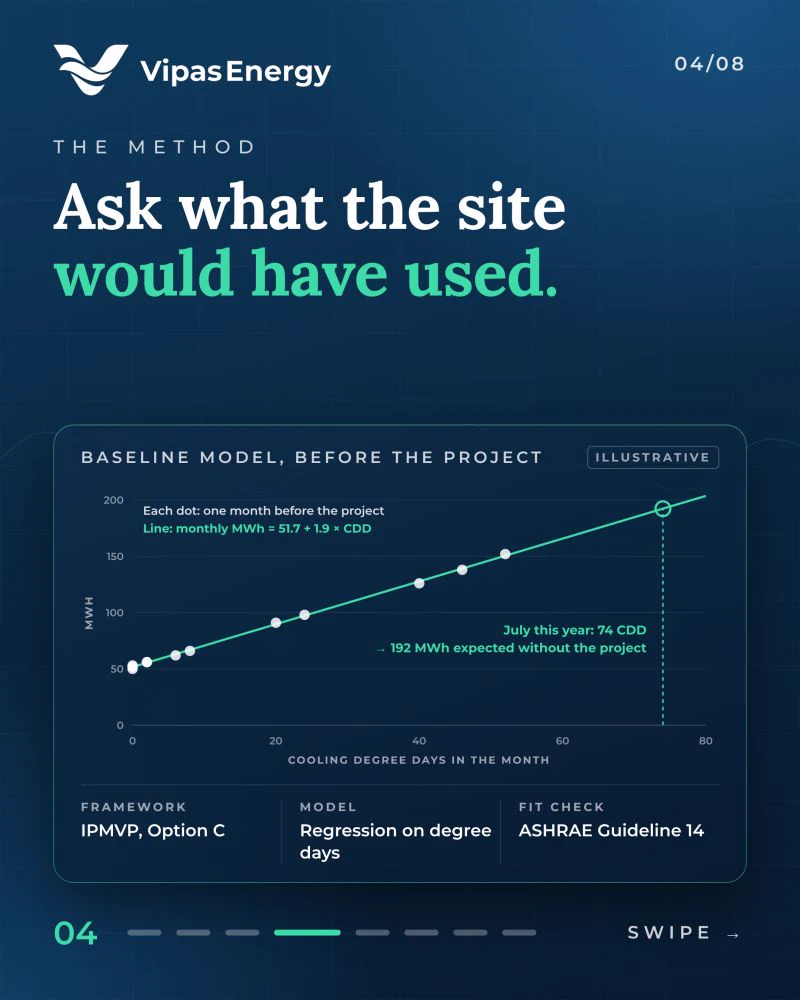
That is the adjusted baseline. Fit a model on the months before the project (usage against degree days), then run it on this year’s weather. Here it says 1,144 MWh. Actual use was 1,040. The project avoided 104 MWh, about 9% against a 10% plan.
This is standard measurement and verification practice: IPMVP calls it a routine adjustment, and ASHRAE Guideline 14 sets fit criteria for the baseline model.
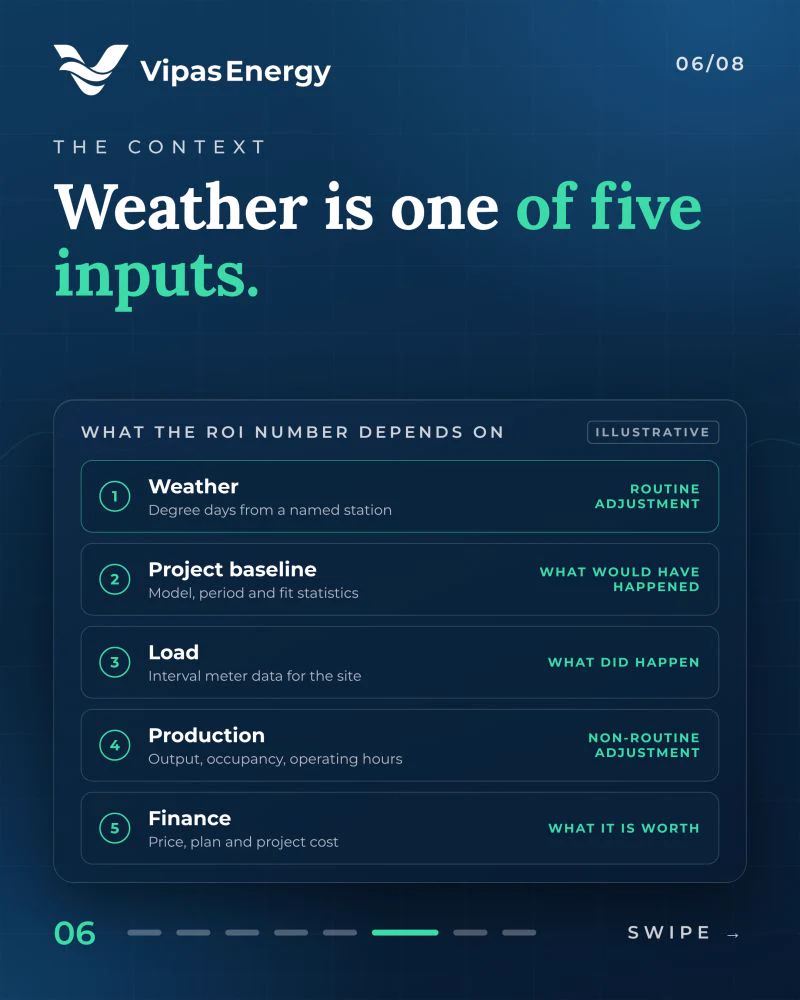
Weather is only one input. Production, occupancy and operating hours move the baseline too. Price and project cost turn the result into money.
Sustainability ROI needs operating context before it reaches Finance. Report the normalized result, with the raw reading beside it.
NoteAll figures are illustrative.