
VIPAS Energy
HomePlatformCapabilitiesOperating modelUse casesAbout
Media & InsightsBook a discovery call
  1. Home
  2. Media & Insights
  3. Can a demand-reduction project accidentally…
In the Money

Can a demand-reduction project accidentally increase your contract exposure?

A 20% demand cut looks like a win on the meter, but a contract fixed at the old load leaves surplus energy to resell and a possible volume charge. In this illustrative example a $160k saving shrinks to about $92k.

  • October 15, 2026
  • Carousel
  • 8 slides
  • 3 min read
View on LinkedIn (opens in a new tab)Share on LinkedIn (opens in a new tab)

Carousel slides: Can a demand-reduction project accidentally increase your contract exposure?

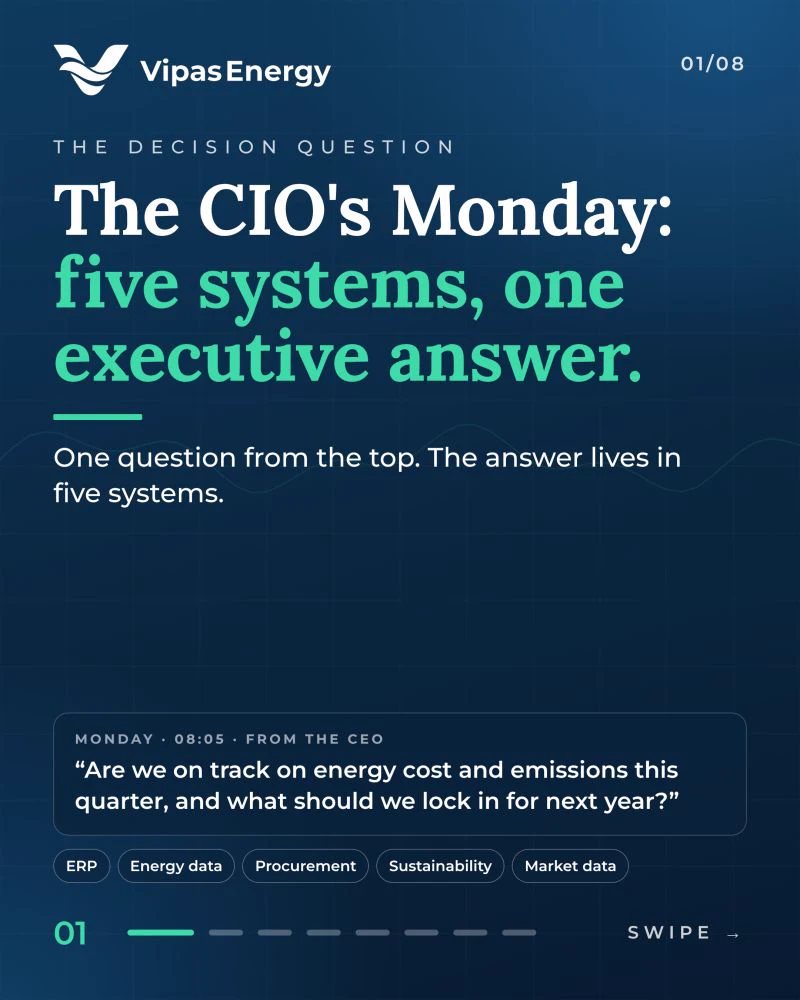
  1. In the money: Can a demand-reduction project accidentally increase your contract exposure? Changing the load can change the position you thought you bought.
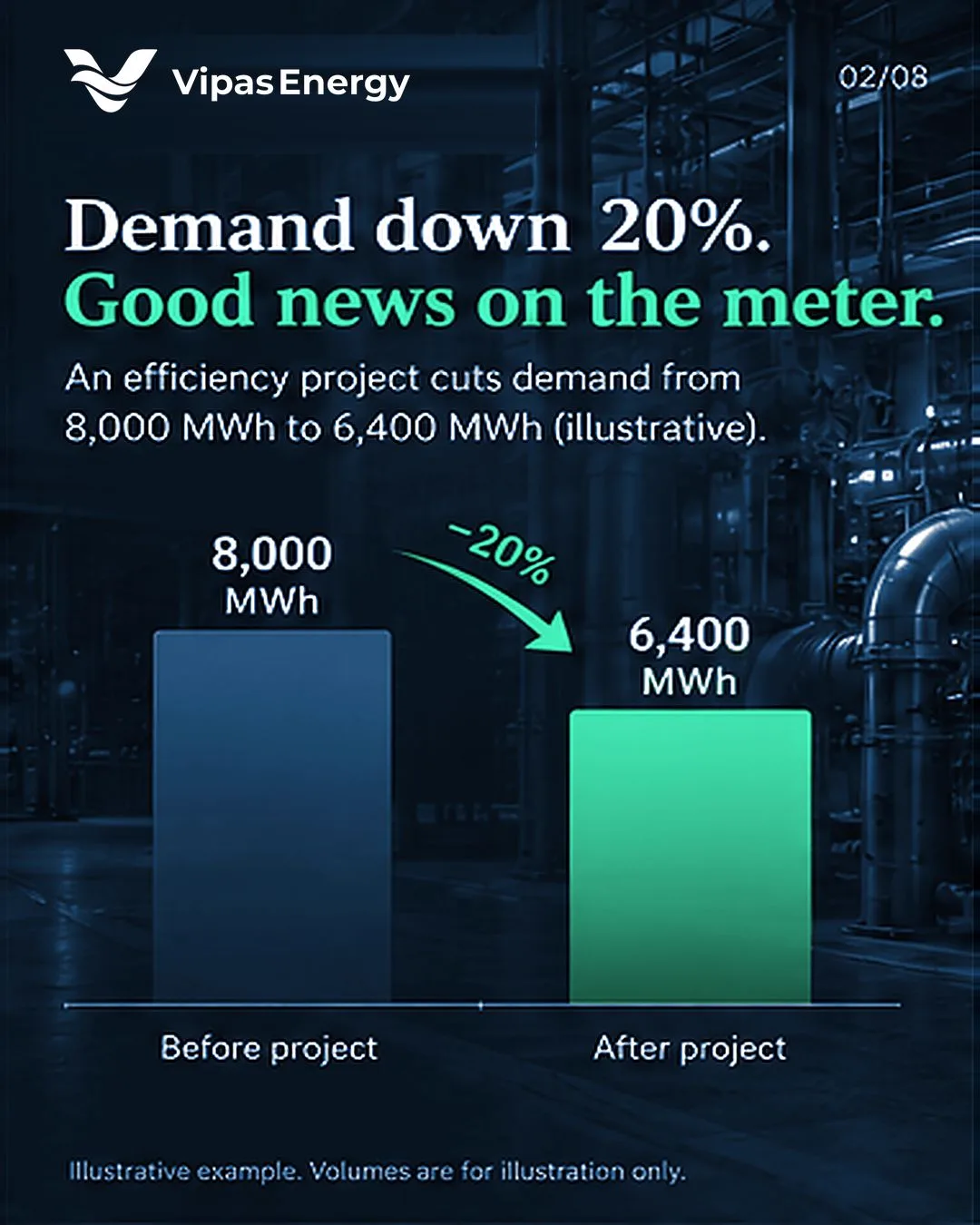
  2. Demand down 20%. Good news on the meter. An efficiency project cuts demand from 8,000 MWh before the project to 6,400 MWh after it (illustrative).
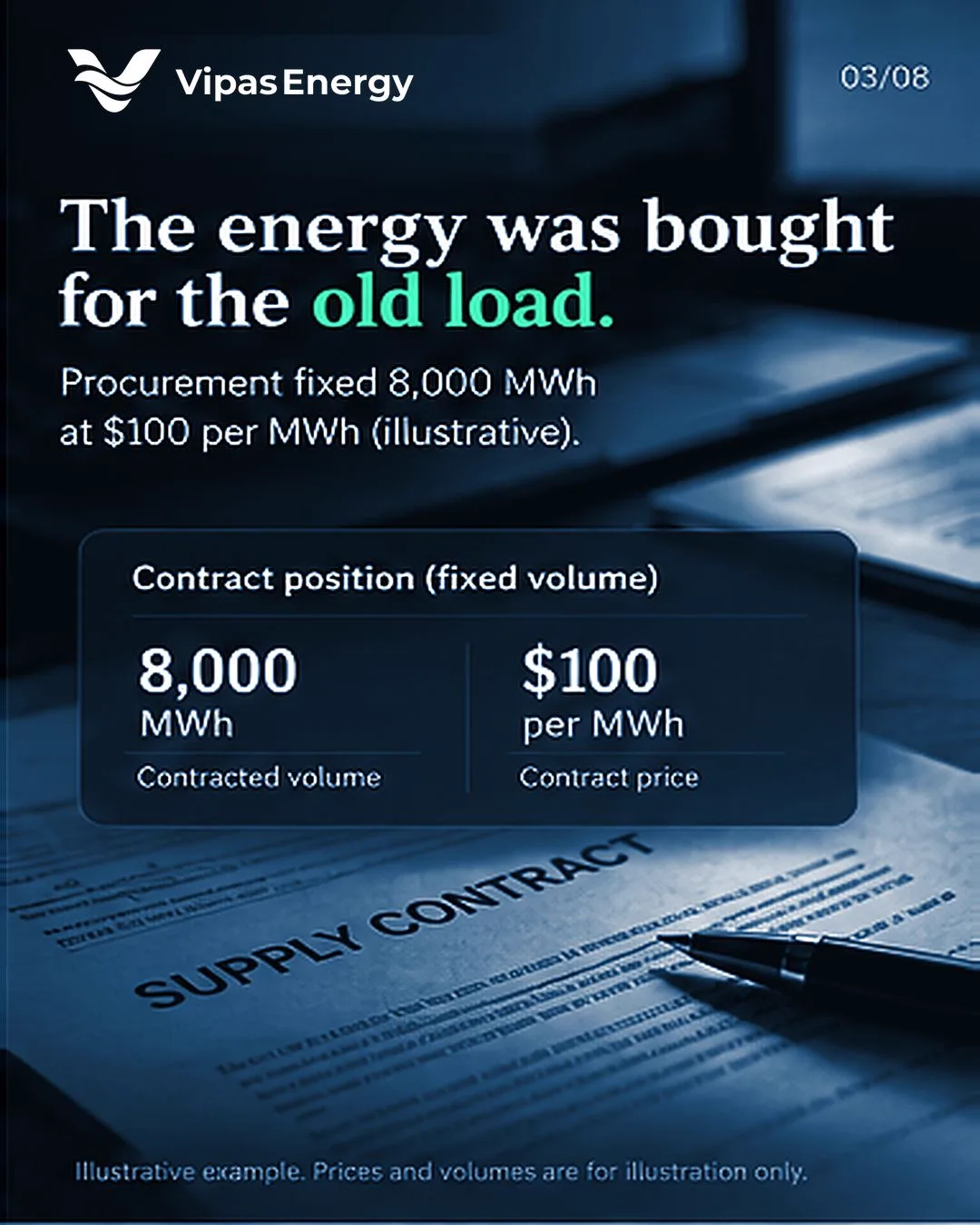
  3. The energy was bought for the old load. Procurement fixed 8,000 MWh at $100 per MWh under a supply contract (illustrative).
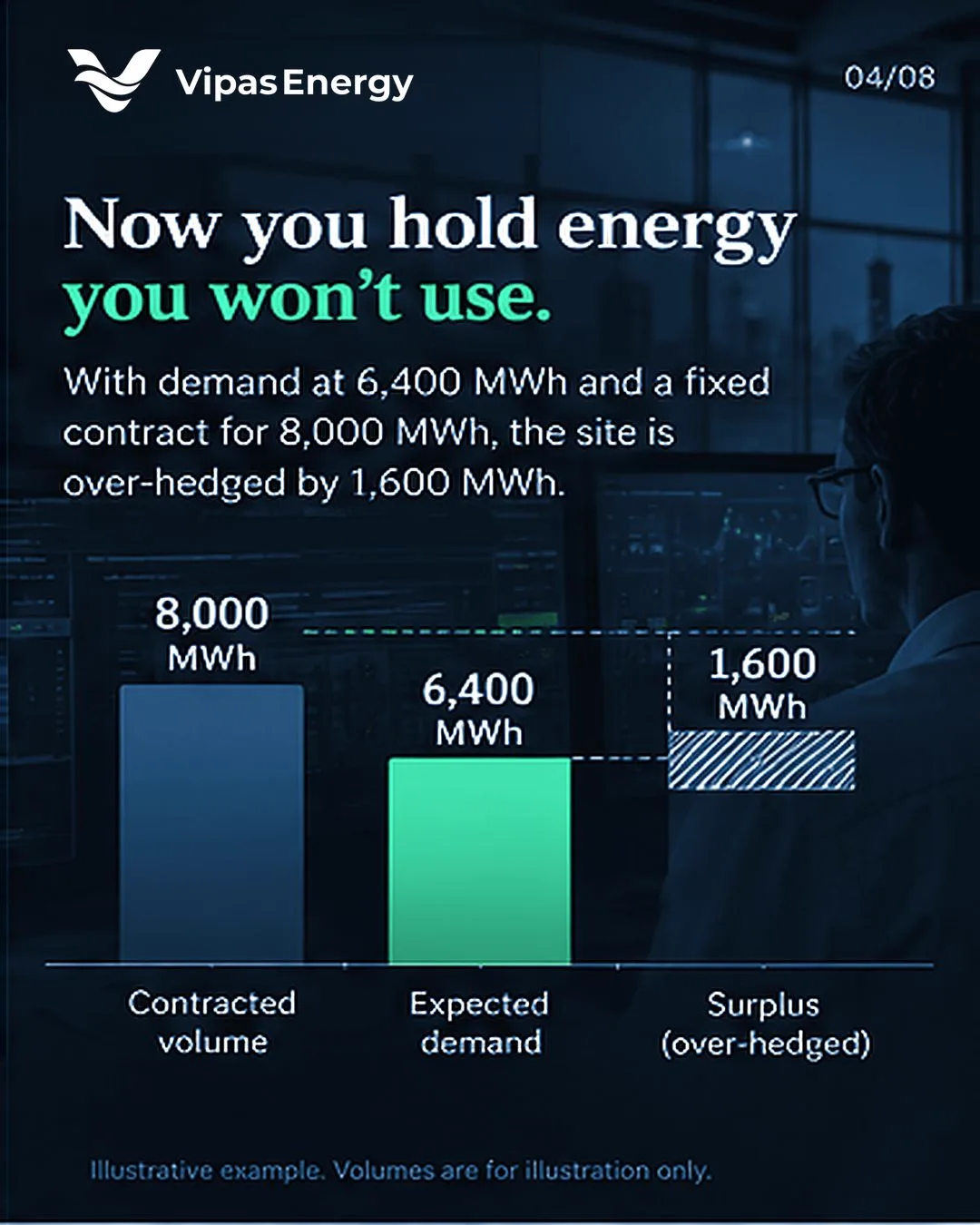
  4. Now you hold energy you won't use. With demand at 6,400 MWh and a fixed contract for 8,000 MWh, the site is over-hedged by 1,600 MWh.
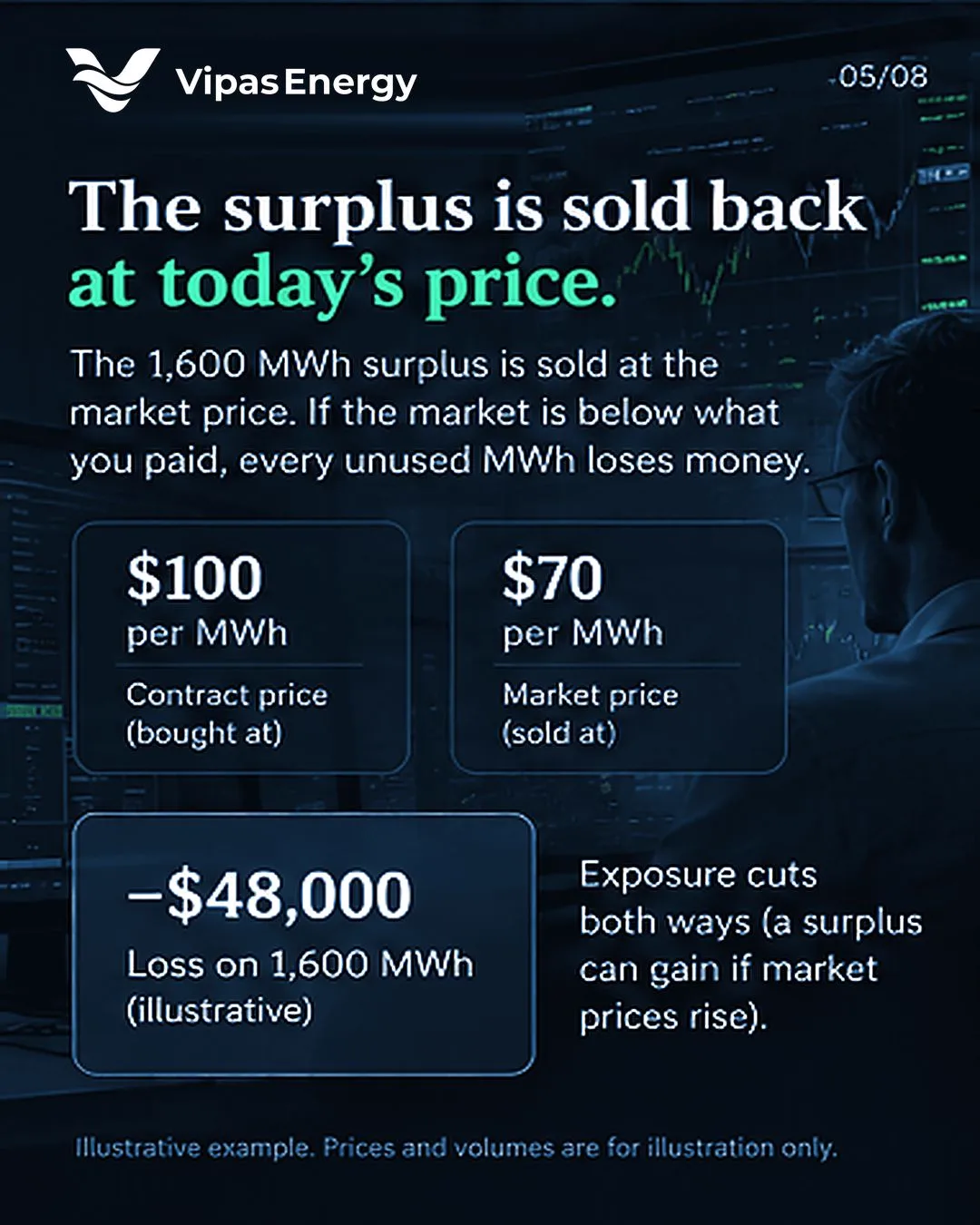
  5. The surplus is sold back at today's price. Bought at $100 per MWh, sold at $70 per MWh: a loss of $48,000 on 1,600 MWh (illustrative). Exposure cuts both ways: a surplus can gain if market prices rise.
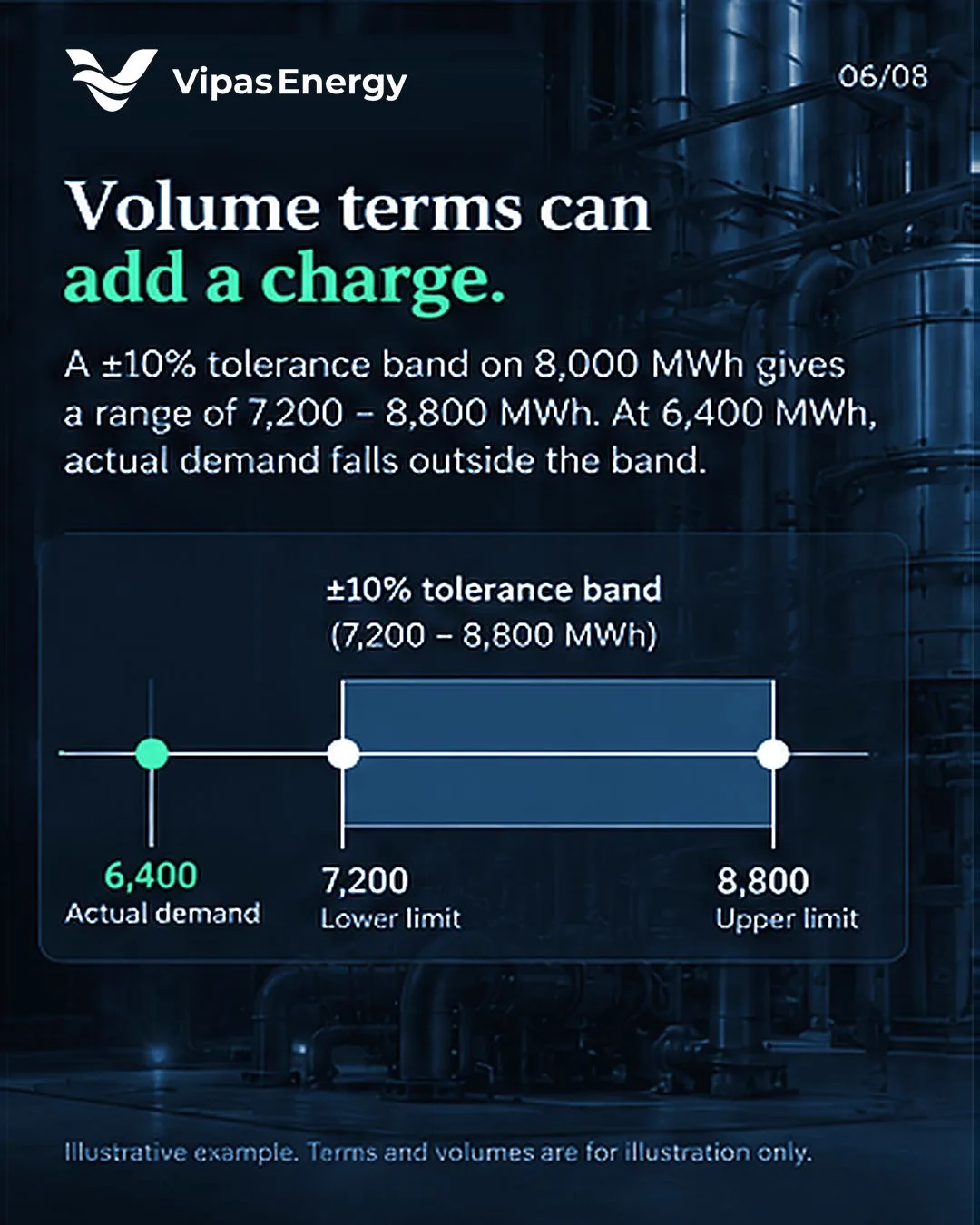
  6. Volume terms can add a charge. A plus or minus 10% tolerance band on 8,000 MWh gives a range of 7,200 to 8,800 MWh. At 6,400 MWh, actual demand falls outside the band.
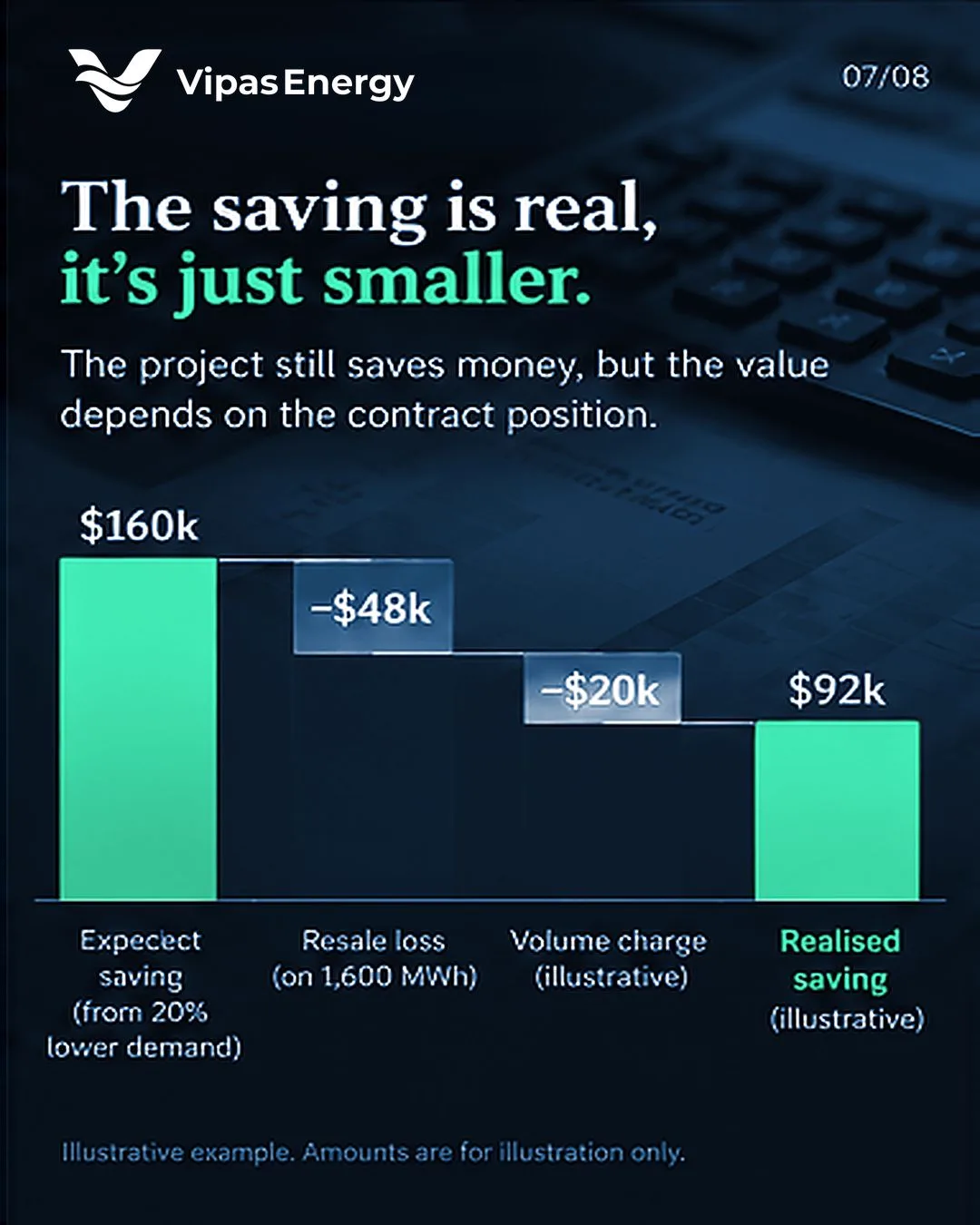
  7. The saving is real, it's just smaller. An expected saving of $160k from 20% lower demand loses $48k to the resale loss on 1,600 MWh and $20k to the volume charge, leaving a realised saving of $92k (illustrative).
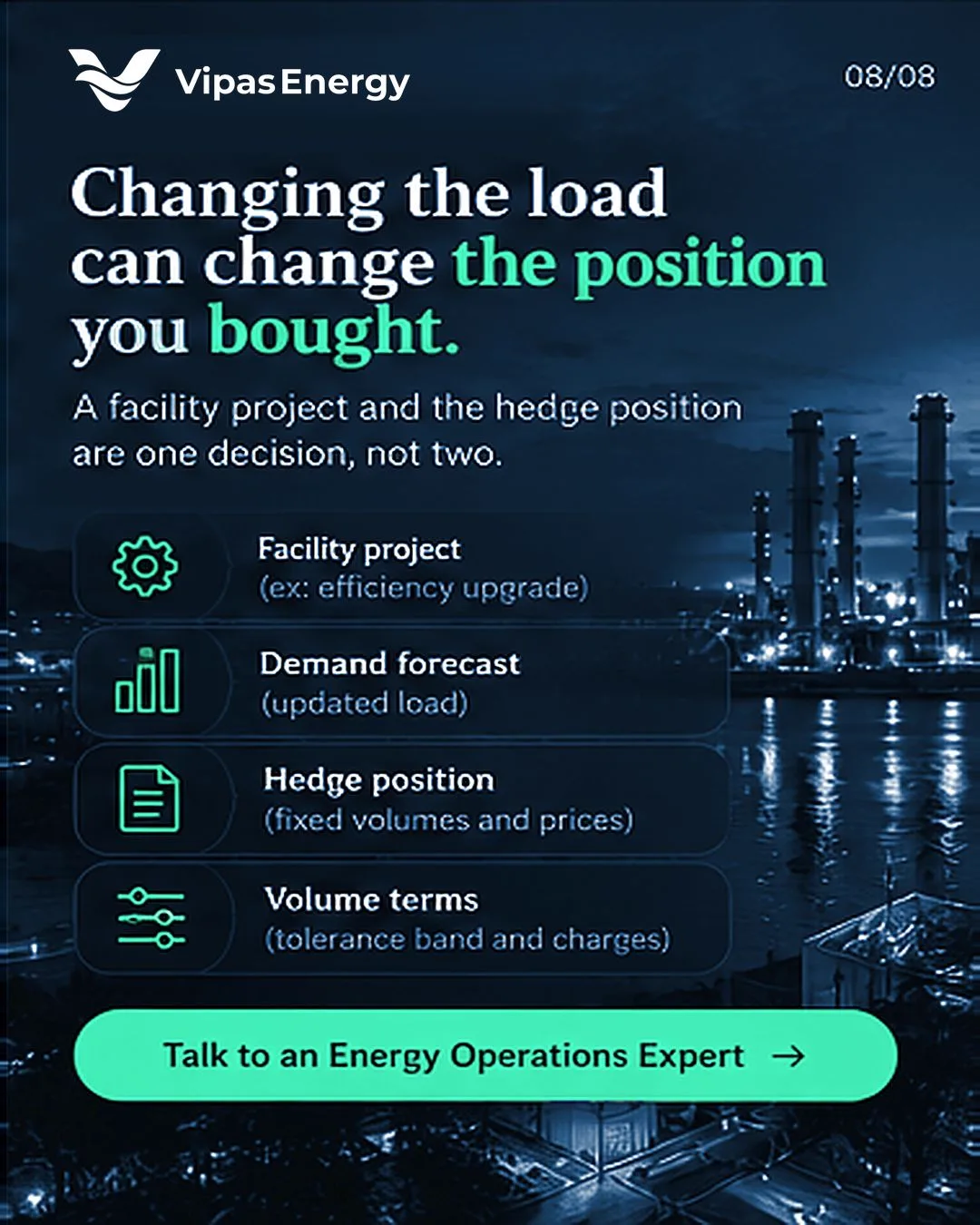
  8. Changing the load can change the position you bought. A facility project and the hedge position are one decision, not two: facility project, demand forecast, hedge position and volume terms. Talk to an Energy Operations Expert.

Slide 1 of 8

Open slide 1 full size (opens in a new tab)

The post

Your efficiency project cut demand by 20%. The meter says it's working. Facilities is ready to call it a win.

But procurement bought this year's energy for last year's load.

Here is how it plays out (illustrative example):

1. Demand drops from 8,000 MWh to 6,400 MWh. Good news on the meter. 2. The contract still fixes 8,000 MWh at $100 per MWh. The energy was bought for the old load. 3. The site now holds 1,600 MWh it won't use. It is over-hedged. 4. That surplus is sold back at today's market price. Bought at $100, sold at $70: a $48,000 loss on 1,600 MWh. 5. Volume terms can add a charge. A ±10% tolerance band on 8,000 MWh covers 7,200 to 8,800 MWh. At 6,400 MWh, actual demand falls outside the band, and a volume charge of around $20,000 can apply. 6. The saving is real, it's just smaller. An expected $160k saving becomes about $92k once the resale loss and the volume charge are counted.

Exposure cuts both ways: if market prices rise, the surplus can gain. Either way, it is exposure nobody planned for.

The fix is not to stop saving energy. It is to treat the facility project and the hedge position as one decision, not two: • Facility project (what changes, and when) • Demand forecast (the updated load) • Hedge position (fixed volumes and prices) • Volume terms (tolerance band and charges)

Changing the load can change the position you thought you bought.

Swipe through the carousel to see how a demand project meets the contract.

Planning an efficiency project this year? Talk to an Energy Operations Expert: vipasenergy.com

NoteAll figures are illustrative. Contract terms vary by market, supplier and contract.
  • #EnergyProcurement
  • #EnergyEfficiency
  • #Hedging
  • #FacilitiesManagement
  • #EnergyManagement
  • #CFO
  • #Procurement
  • #IndustrialEnergy
  • #VIPASEnergy

About this post

Published
October 15, 2026
Format
Carousel, 8 slides
Series
In the Money
Reading time
3 min
  • Open on LinkedIn (opens in a new tab)
  • Follow VIPAS Energy (opens in a new tab)
  • Slide-by-slide transcript ↓
Slide by slide

What each slide says.

A text version of the carousel. Select a thumbnail to show that slide in the viewer above.

  1. Show slide 1 in the viewer
    Slide 01

    Slide 1: In the money: Can a demand-reduction project accidentally increase your contract exposure? Changing the load can change the position you thought you bought.

  2. Show slide 2 in the viewer
    Slide 02

    Slide 2: Demand down 20%. Good news on the meter. An efficiency project cuts demand from 8,000 MWh before the project to 6,400 MWh after it (illustrative).

  3. Show slide 3 in the viewer
    Slide 03

    Slide 3: The energy was bought for the old load. Procurement fixed 8,000 MWh at $100 per MWh under a supply contract (illustrative).

  4. Show slide 4 in the viewer
    Slide 04

    Slide 4: Now you hold energy you won't use. With demand at 6,400 MWh and a fixed contract for 8,000 MWh, the site is over-hedged by 1,600 MWh.

  5. Show slide 5 in the viewer
    Slide 05

    Slide 5: The surplus is sold back at today's price. Bought at $100 per MWh, sold at $70 per MWh: a loss of $48,000 on 1,600 MWh (illustrative). Exposure cuts both ways: a surplus can gain if market prices rise.

  6. Show slide 6 in the viewer
    Slide 06

    Slide 6: Volume terms can add a charge. A plus or minus 10% tolerance band on 8,000 MWh gives a range of 7,200 to 8,800 MWh. At 6,400 MWh, actual demand falls outside the band.

  7. Show slide 7 in the viewer
    Slide 07

    Slide 7: The saving is real, it's just smaller. An expected saving of $160k from 20% lower demand loses $48k to the resale loss on 1,600 MWh and $20k to the volume charge, leaving a realised saving of $92k (illustrative).

  8. Show slide 8 in the viewer
    Slide 08

    Slide 8: Changing the load can change the position you bought. A facility project and the hedge position are one decision, not two: facility project, demand forecast, hedge position and volume terms. Talk to an Energy Operations Expert.

← Older postA supplier offers you 8% cheaper. Your contract still has 18 months to run.Newer post →92 per MWh. Is that a good price? Compared to what?
More from LinkedIn

Keep reading.

All insights →
  • 8 slides

    Systems That Don’t TalkNov 20, 2026

    The data moved. The meaning didn’t.

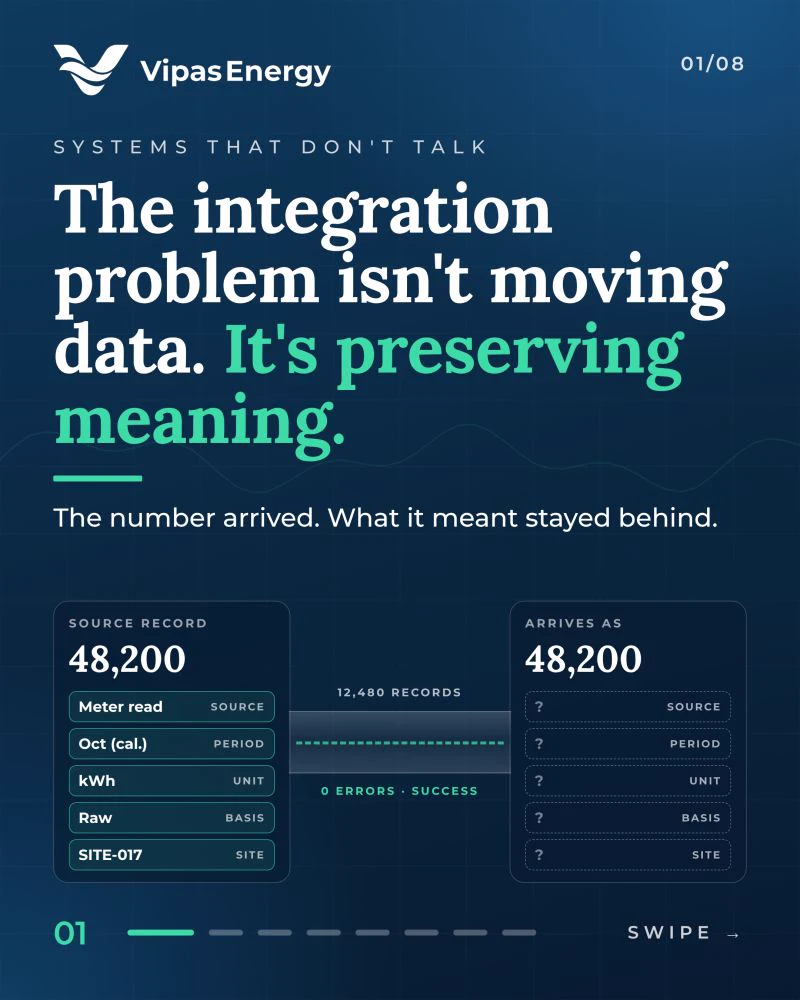
    The nightly load ran with zero errors, yet nobody can say what 48,200 means. Source, calendar, units, normalization and site identity are five labels that need to travel with every number.

    Read post →LinkedIn : The data moved. The meaning didn’t. (opens in a new tab)
  • Article

    Connect, Don’t Replace · NewsletterNov 19, 2026

    Connect, Don’t Replace: What to Demand From an Energy Modernization Program

    Most enterprises already run the systems an energy decision needs. Before signing a modernization program, demand five things: integration, data ownership, governance, interoperability and change management.

    Read post →LinkedIn : Connect, Don’t Replace: What to Demand From an Energy Modernization Program (opens in a new tab)
  • 8 slides

    The Decision QuestionNov 18, 2026

    The CIO’s Monday: five systems, one executive answer.

    One CEO question lives in five systems with five owners and five as-of dates. A new dashboard shows the disagreement faster; trusted context across systems resolves it.

    Read post →LinkedIn : The CIO’s Monday: five systems, one executive answer. (opens in a new tab)
Start with one real workflow

Where is energy fragmentation slowing your team down?

Bring a demand, sourcing, tariff, approval or reconciliation challenge. We’ll explore what a clearer operating path could look like.

Book a discovery conversation →
VIPAS Energy

Building a connected operating layer for modern energy management.

Explore

PlatformCapabilitiesOperating model

Company

About VIPASMedia & InsightsTrust & governanceContact

Use cases

Multi-site demandRates & tariffsApprovalsLinkedIn
© 2026 VIPAS Energy.Connected decisions. Clearer outcomes.