VIPAS Energy
HomePlatformCapabilitiesOperating modelUse casesAbout
Media & InsightsBook a discovery call
  1. Home
  2. Media & Insights
  3. Contract data is here
In the Money

Contract data is here. Load data is there. Tariff data is somewhere else.

One energy buying decision needs four inputs: contract, load, tariff and budget. Each lives in a different system with a different owner, and the economics break in the gaps between them.

  • October 19, 2026
  • Carousel
  • 8 slides
  • 2 min read
View on LinkedIn (opens in a new tab)Share on LinkedIn (opens in a new tab)

Carousel slides: Contract data is here. Load data is there. Tariff data is somewhere else.

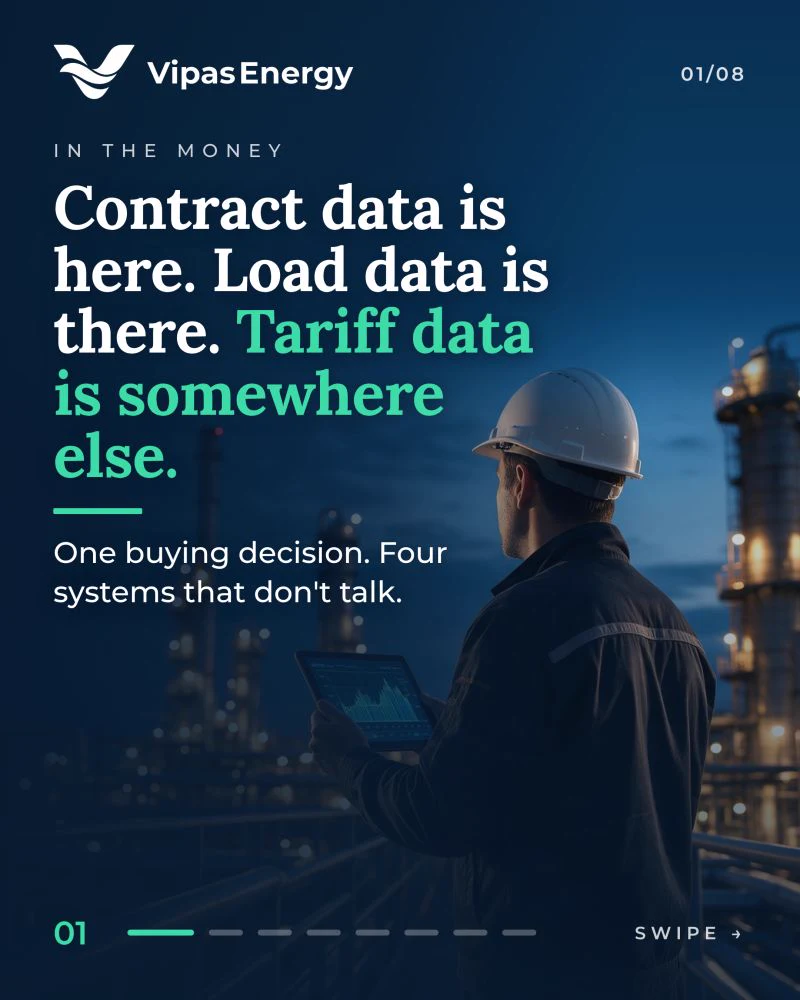
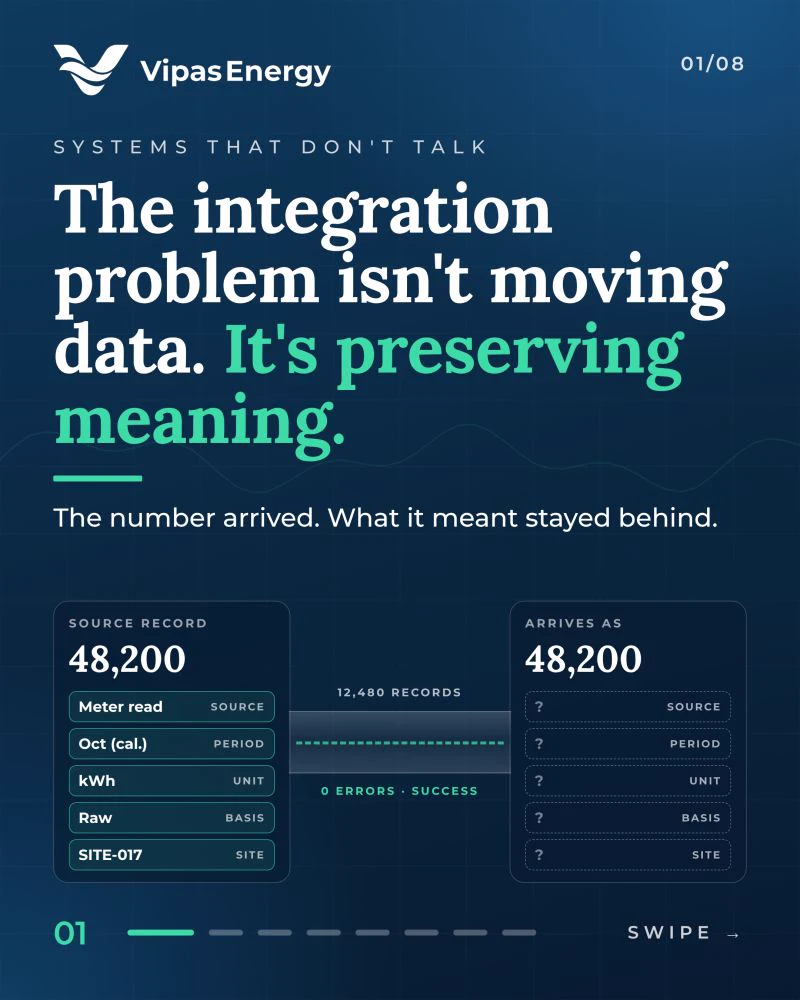
  1. In the Money: contract data is here, load data is there, tariff data is somewhere else. One buying decision, four systems that don't talk.
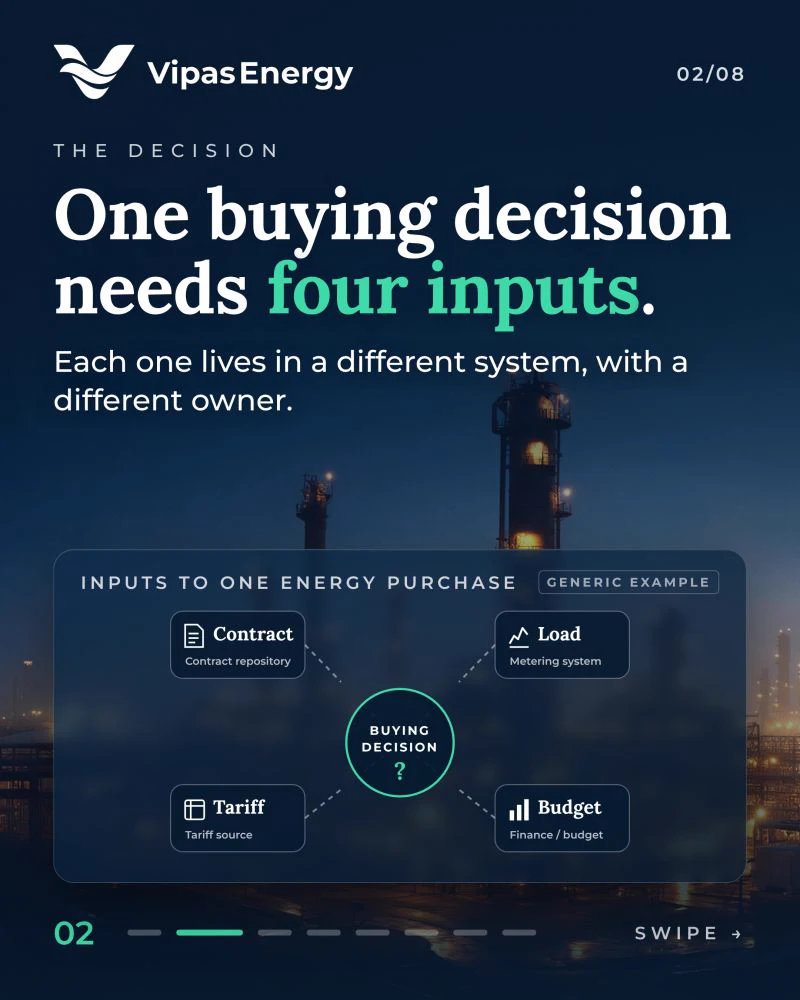
  2. The decision: one buying decision needs four inputs, contract, load, tariff and budget, feeding one energy purchase. Each lives in a different system with a different owner. Generic example.
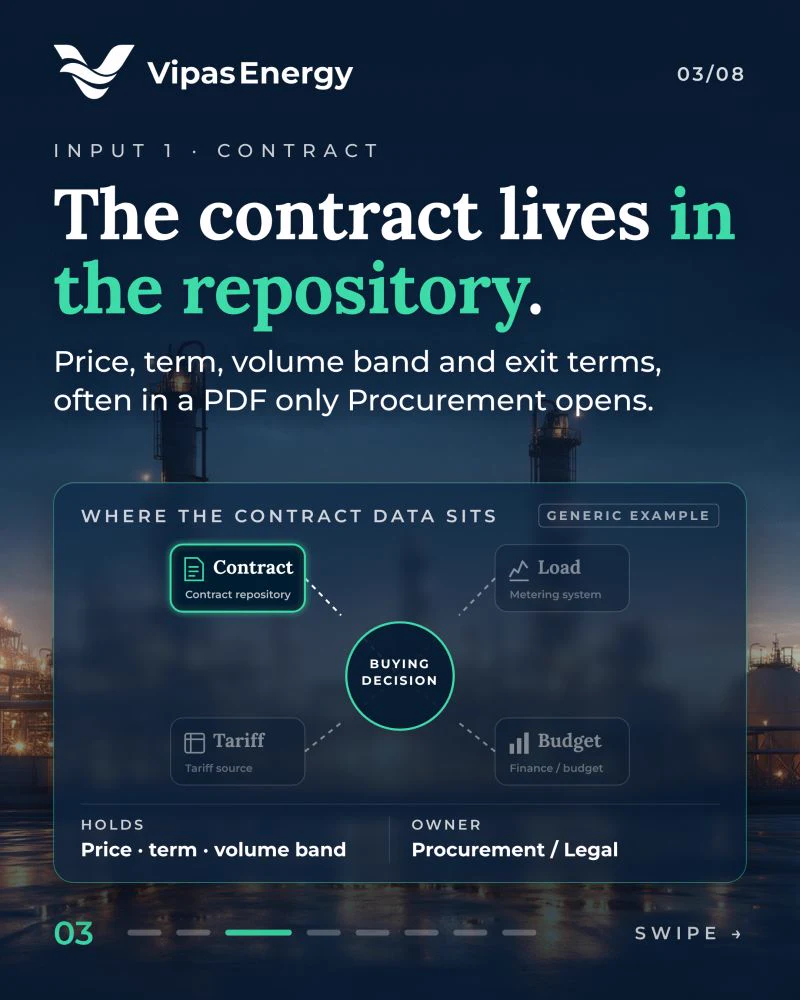
  3. Input 1, contract: the contract lives in the repository. Price, term, volume band and exit terms, often in a PDF only Procurement opens; owned by Procurement and Legal. Generic example.
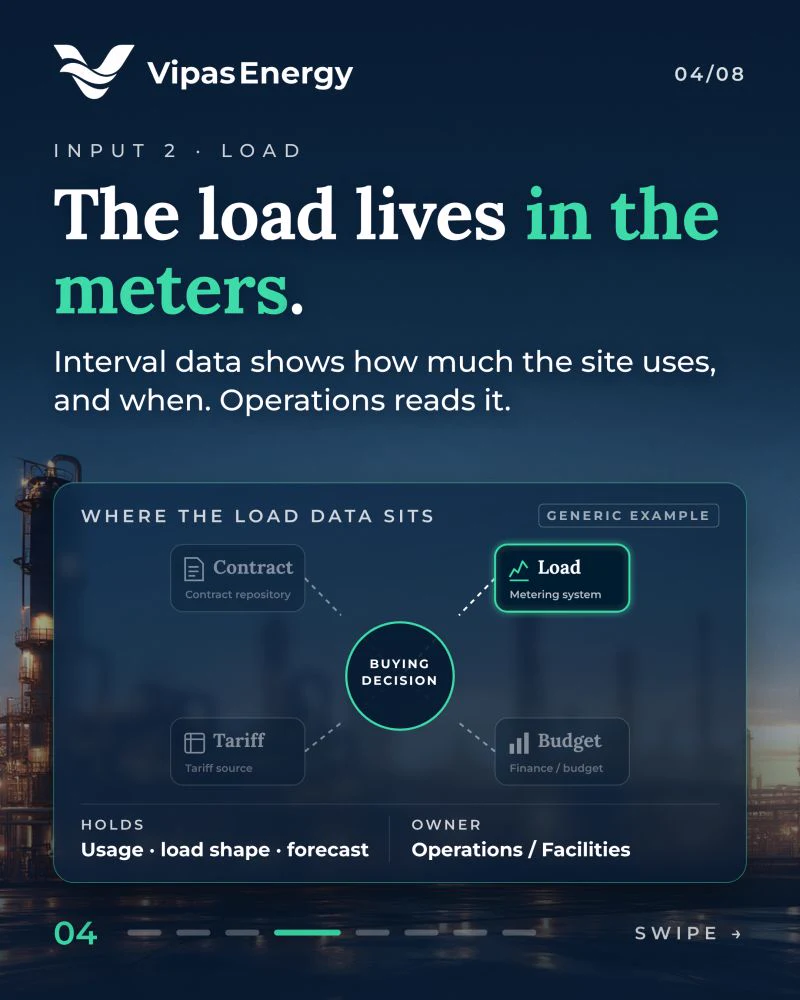
  4. Input 2, load: the load lives in the meters. Interval data shows how much the site uses, and when; it holds usage, load shape and forecast, and Operations and Facilities own it. Generic example.
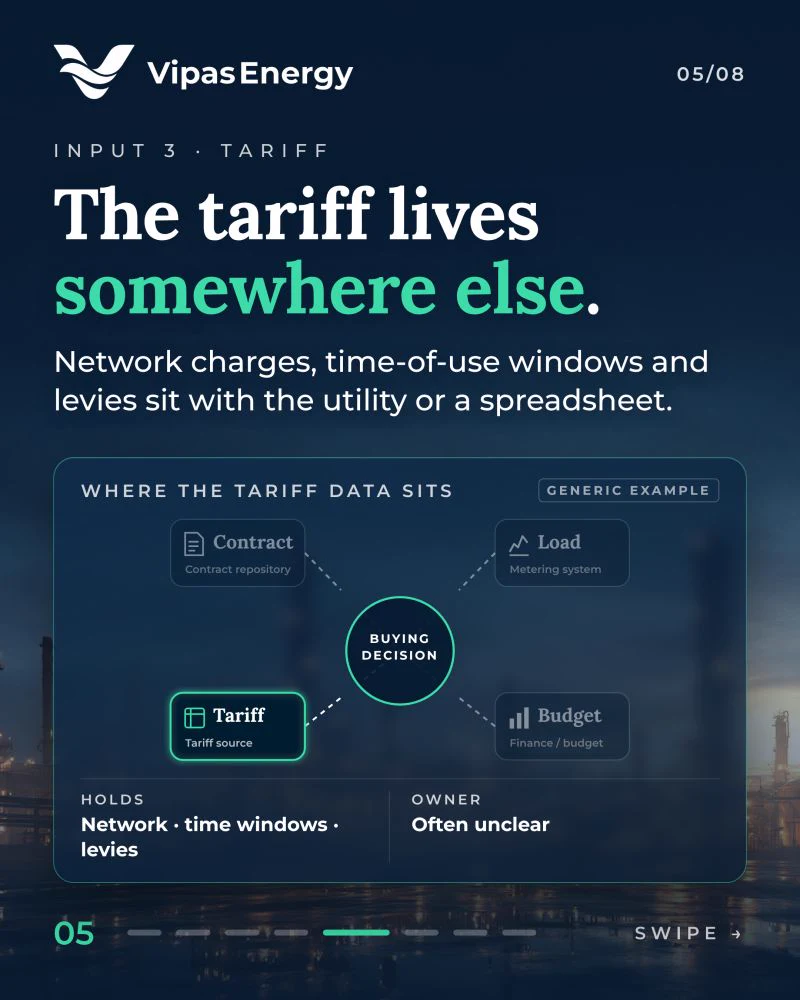
  5. Input 3, tariff: the tariff lives somewhere else. Network charges, time-of-use windows and levies sit with the utility or in a spreadsheet, and the owner is often unclear. Generic example.
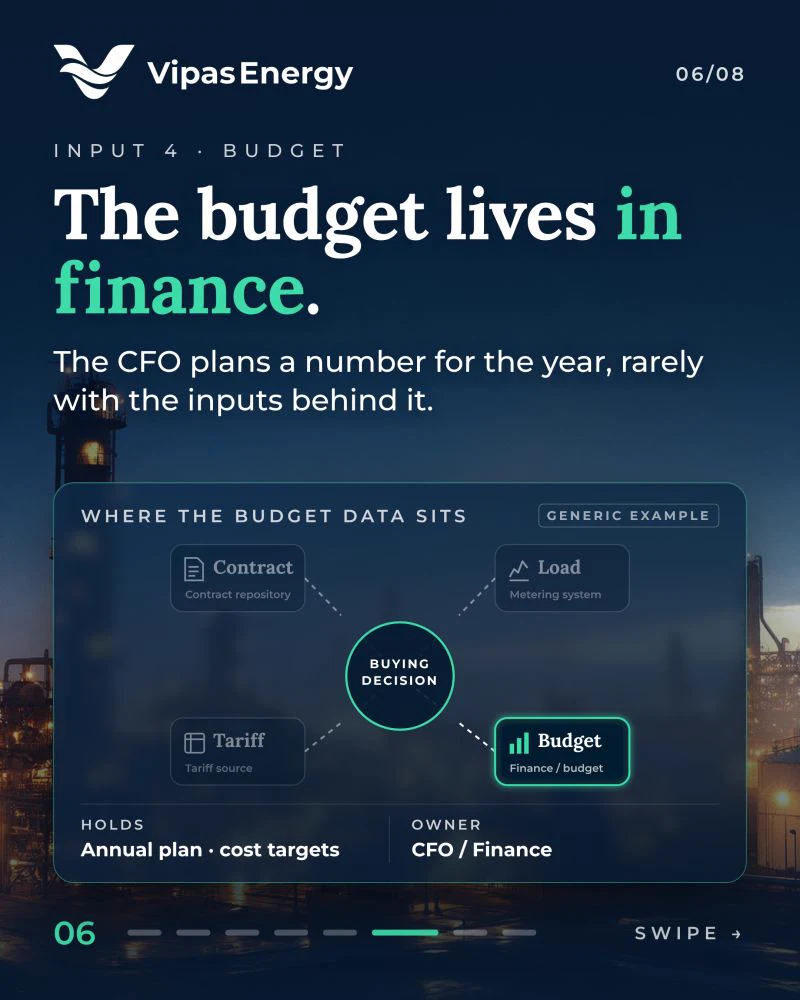
  6. Input 4, budget: the budget lives in finance. The CFO plans a number for the year, rarely with the inputs behind it; it holds the annual plan and cost targets. Generic example.
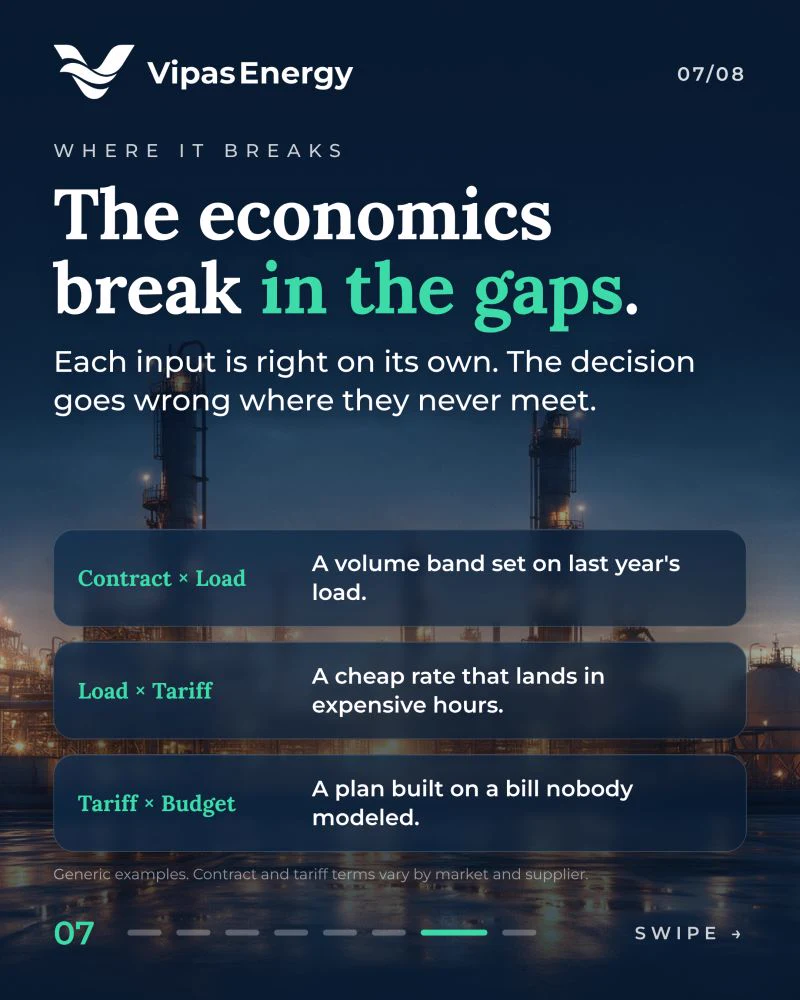
  7. Where it breaks: the economics break in the gaps. Contract and load: a volume band set on last year's load. Load and tariff: a cheap rate that lands in expensive hours. Tariff and budget: a plan built on a bill nobody modeled. Generic examples.
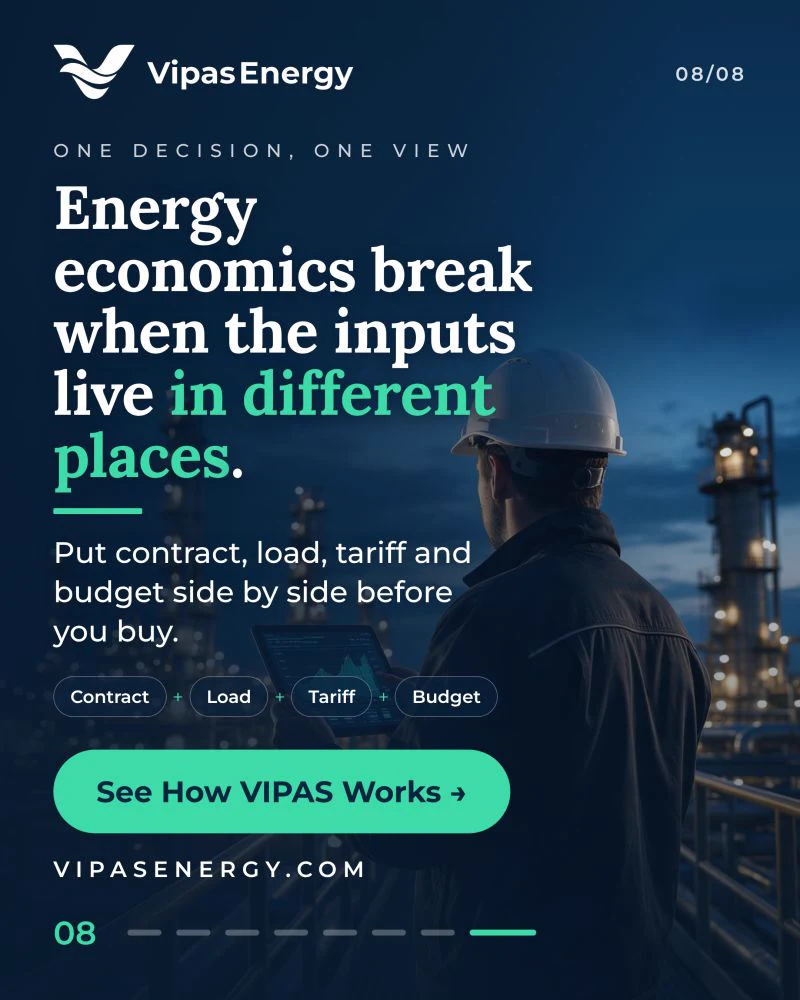
  8. One decision, one view: energy economics break when the inputs live in different places. Put contract, load, tariff and budget side by side before you buy. See how VIPAS works at vipasenergy.com.

Slide 1 of 8

Open slide 1 full size (opens in a new tab)

The post

And the budget sits in finance.

One energy buying decision needs all four inputs. In most organisations, each one lives in a different system with a different owner:

Contract: price, term and volume band, in a repository only Procurement opens. Load: how much the site uses, and when, in the metering system Operations reads. Tariff: network charges, time-of-use windows and levies, often with the utility or in a spreadsheet nobody owns. Budget: the annual cost plan, built by Finance.

Each input is right on its own. The economics break in the gaps between them: A volume band set on last year’s load. A cheap rate that lands in expensive hours. A plan built on a bill nobody modeled.

Energy economics break when the inputs required for one decision live in different places. Before you buy, put contract, load, tariff and budget side by side.

NoteGeneric examples. Contract and tariff terms vary by market and supplier.
  • #EnergyProcurement
  • #CFO
  • #EnergyManagement
  • #Finance
  • #DecisionMaking

About this post

Published
October 19, 2026
Format
Carousel, 8 slides
Series
In the Money
Reading time
2 min
  • Open on LinkedIn (opens in a new tab)
  • Follow VIPAS Energy (opens in a new tab)
  • Slide-by-slide transcript ↓
Slide by slide

What each slide says.

A text version of the carousel. Select a thumbnail to show that slide in the viewer above.

  1. Show slide 1 in the viewer
    Slide 01

    Slide 1: In the Money: contract data is here, load data is there, tariff data is somewhere else. One buying decision, four systems that don't talk.

  2. Show slide 2 in the viewer
    Slide 02

    Slide 2: The decision: one buying decision needs four inputs, contract, load, tariff and budget, feeding one energy purchase. Each lives in a different system with a different owner. Generic example.

  3. Show slide 3 in the viewer
    Slide 03

    Slide 3: Input 1, contract: the contract lives in the repository. Price, term, volume band and exit terms, often in a PDF only Procurement opens; owned by Procurement and Legal. Generic example.

  4. Show slide 4 in the viewer
    Slide 04

    Slide 4: Input 2, load: the load lives in the meters. Interval data shows how much the site uses, and when; it holds usage, load shape and forecast, and Operations and Facilities own it. Generic example.

  5. Show slide 5 in the viewer
    Slide 05

    Slide 5: Input 3, tariff: the tariff lives somewhere else. Network charges, time-of-use windows and levies sit with the utility or in a spreadsheet, and the owner is often unclear. Generic example.

  6. Show slide 6 in the viewer
    Slide 06

    Slide 6: Input 4, budget: the budget lives in finance. The CFO plans a number for the year, rarely with the inputs behind it; it holds the annual plan and cost targets. Generic example.

  7. Show slide 7 in the viewer
    Slide 07

    Slide 7: Where it breaks: the economics break in the gaps. Contract and load: a volume band set on last year's load. Load and tariff: a cheap rate that lands in expensive hours. Tariff and budget: a plan built on a bill nobody modeled. Generic examples.

  8. Show slide 8 in the viewer
    Slide 08

    Slide 8: One decision, one view: energy economics break when the inputs live in different places. Put contract, load, tariff and budget side by side before you buy. See how VIPAS works at vipasenergy.com.

← Older post92 per MWh. Is that a good price? Compared to what?Newer post →Fixed, indexed or block-and-index: which risk are you buying?
More from LinkedIn

Keep reading.

All insights →
  • 8 slides

    Systems That Don’t TalkNov 20, 2026

    The data moved. The meaning didn’t.

    The nightly load ran with zero errors, yet nobody can say what 48,200 means. Source, calendar, units, normalization and site identity are five labels that need to travel with every number.

    Read post →LinkedIn : The data moved. The meaning didn’t. (opens in a new tab)
  • Article

    Connect, Don’t Replace · NewsletterNov 19, 2026

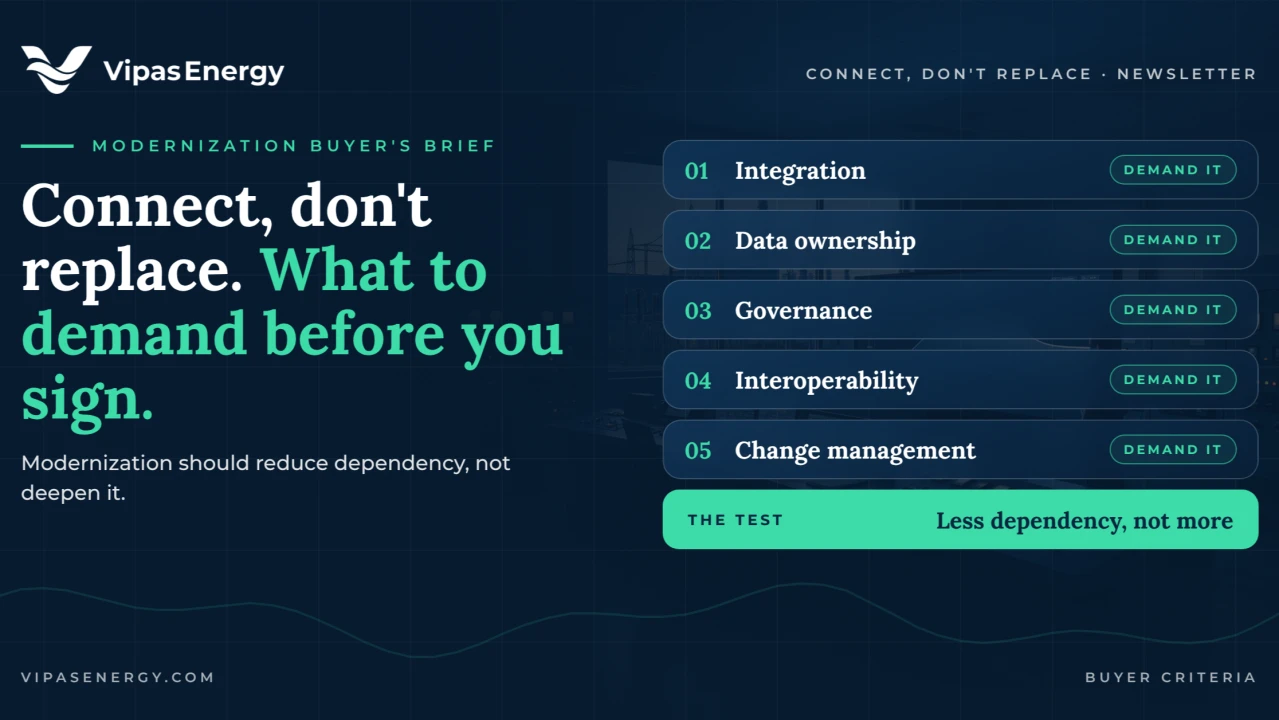
    Connect, Don’t Replace: What to Demand From an Energy Modernization Program

    Most enterprises already run the systems an energy decision needs. Before signing a modernization program, demand five things: integration, data ownership, governance, interoperability and change management.

    Read post →LinkedIn : Connect, Don’t Replace: What to Demand From an Energy Modernization Program (opens in a new tab)
  • 8 slides

    The Decision QuestionNov 18, 2026

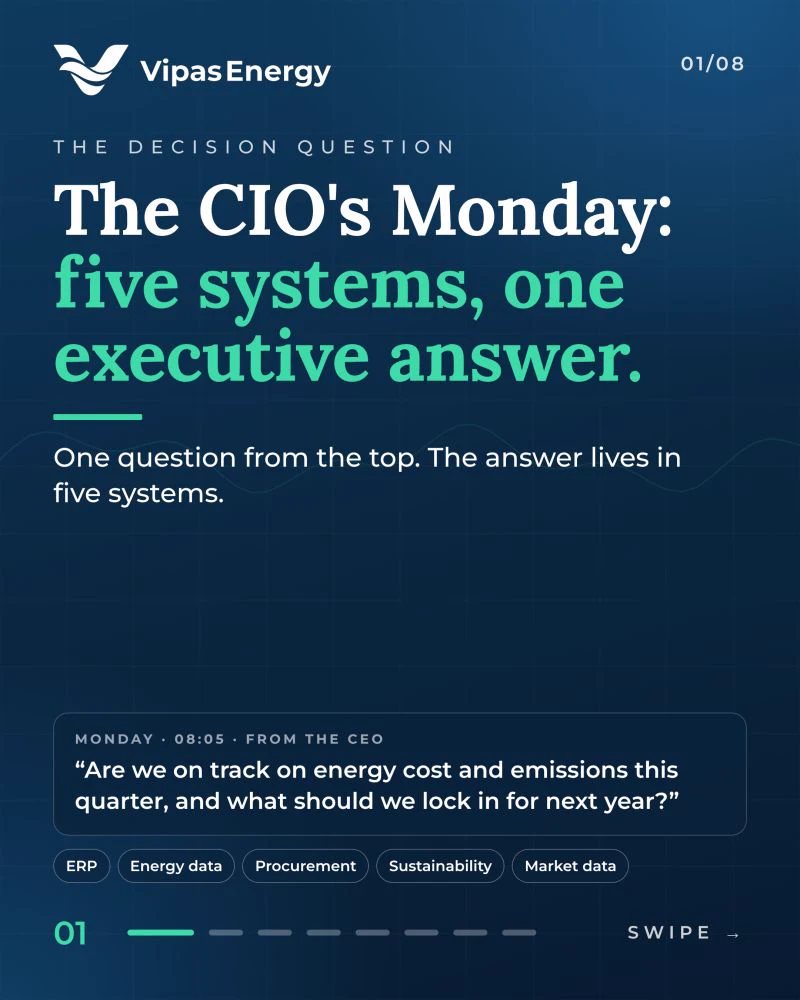
    The CIO’s Monday: five systems, one executive answer.

    One CEO question lives in five systems with five owners and five as-of dates. A new dashboard shows the disagreement faster; trusted context across systems resolves it.

    Read post →LinkedIn : The CIO’s Monday: five systems, one executive answer. (opens in a new tab)
Start with one real workflow

Where is energy fragmentation slowing your team down?

Bring a demand, sourcing, tariff, approval or reconciliation challenge. We’ll explore what a clearer operating path could look like.

Book a discovery conversation →
VIPAS Energy

Building a connected operating layer for modern energy management.

Explore

PlatformCapabilitiesOperating model

Company

About VIPASMedia & InsightsTrust & governanceContact

Use cases

Multi-site demandRates & tariffsApprovalsLinkedIn
© 2026 VIPAS Energy.Connected decisions. Clearer outcomes.