Energy has become one of the most strategically important operating costs for businesses.
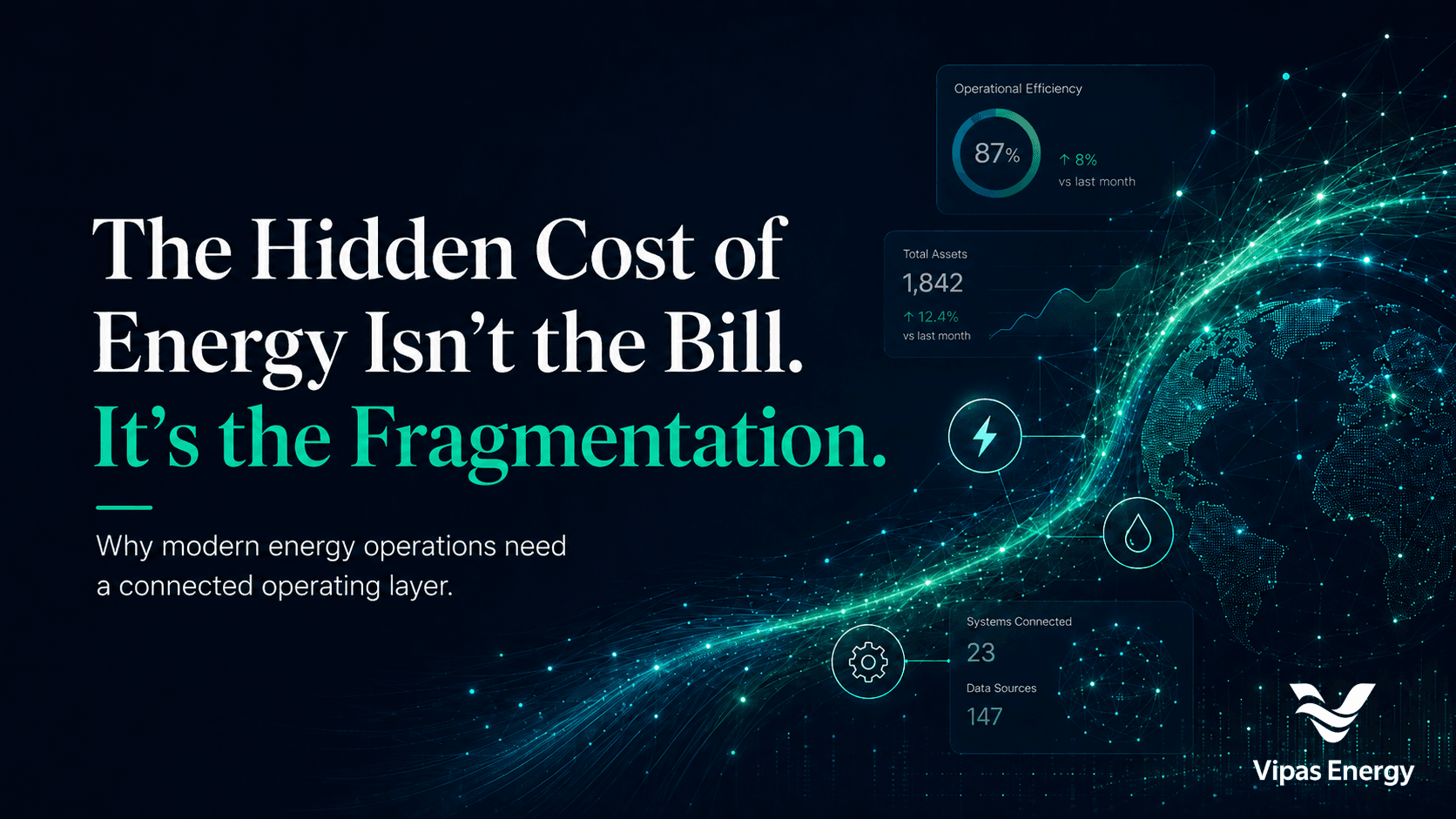
Yet, for many organizations, managing it still means working across disconnected spreadsheets, supplier portals, invoices, emails, contracts, tariff documents and internal approval chains.
The problem is no longer access to data. The problem is that the data, decisions and workflows rarely live in the same place.
Fragmentation hides between the workflows.
A typical energy operation may involve understanding current and future demand, evaluating suppliers, comparing rates and tariff structures, managing commitments, reviewing invoices and funding requirements, coordinating approvals, tracking reconciliation, monitoring carbon goals, and maintaining an audit trail.
Each activity may work individually. But when they operate as separate processes, organizations lose visibility between them.
A pricing decision may not immediately reflect in forecasting. A supplier commitment may sit outside the financial approval workflow. An invoice may be processed without the context of contracted rates. Carbon reporting may exist as an entirely separate exercise.
Connect decisions, not just dashboards.
Dashboards, analytics and automation are useful. The bigger opportunity is a connected operating environment where demand, supply, commercial terms, approvals, financial flows and sustainability intelligence work together.
That means moving toward a system where organizations can plan demand, evaluate supply, understand economics, approve commitments, manage execution, reconcile outcomes and measure impact.
The operating layer is the opportunity.
This is the problem space VIPAS Energy is working on. The goal is not simply another energy dashboard, but an operating layer that brings visibility, control and intelligence to the way decisions move from requirement to execution.
The future of energy management will not be defined only by better data. It will be defined by better-connected decisions.